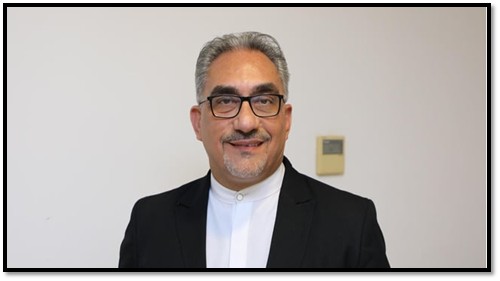
By Rev. Dr. Jack Y. Sara
Yesterday, while visiting a close relative in a hospital, I met an elderly Palestinian woman who had worked there for many years. She was supposed to be retired. Yet there she was, back at work. I asked why.
She told me that settlers had taken her family’s 80 dunums of land north of Ramallah – roughly 20 acres. The land had been their security and livelihood. Now, she said, they had lost everything. They could not afford an effective legal struggle, and they believed the authorities stood with the settlers rather than with them. So, at an age when she should have been resting, she had returned to the hospital to survive.
Her particular account deserves proper investigation, and I withhold identifying details for her protection. But her story is not isolated. It belongs to a wider, well-documented pattern of land loss, intimidation, restricted access, damaged livelihoods, and displacement across the occupied West Bank.
A pattern, not an exception
By 20 July 2026, the United Nations Office for the Coordination of Humanitarian Affairs had recorded more than 1,330 settler attacks causing Palestinian casualties, property damage, or both since the beginning of the year – more than six incidents per day across 250 Palestinian communities. OCHA also reported about 880 Palestinian injuries in the context of settler attacks, including 720 people injured directly by settlers. More than half of the fatalities connected to settler attacks that year had occurred in the Ramallah governorate.
The human consequences extend beyond the moment of an attack. By early July, more than 6,200 Palestinians, including over 3,000 children, had been displaced from their communities in the context of settler attacks and related access restrictions since January 2023. In the week covered by OCHA’s 14 August report alone, 38 additional settler attacks resulted in casualties, property damage, or both.
Even prominent Israeli political and military figures have acknowledged the crisis. In November 2025, Israeli leaders condemned a wave of attacks, while retired Major General Israel Ziv argued that through policy and silence the state had ‘lost control.’ By August 2026, reporting by Israel’s Kan public broadcaster, cited by The Times of Israel, said serious incidents of nationalist crime by extremist Jewish settlers had risen by 63 percent in the first half of the year and that Israeli security bodies classify such offenses as terrorism. That does not mean every Israeli or every settler is violent. It does mean the violence cannot honestly be dismissed as a few unrelated incidents without examining the policies, protection, impunity, and settlement expansion that form its environment.
International law is also clear. United Nations Security Council Resolution 2334 states that settlements in the Palestinian territory occupied since 1967, including East Jerusalem, have no legal validity. In its July 2024 advisory opinion, the International Court of Justice concluded that Israeli settlement policy and the associated regime violate international law. Israel rejects important aspects of this legal position and describes the territory as disputed. Christians may debate political arrangements, but we may not use disagreement as permission to ignore the neighbor whose field, home, water, safety, or future is being taken away.
Qusra and the language of terrorism
The recent events in Qusra, south of Nablus, show how far the crisis has developed. In August 2026, Israeli settlers surrounded three Palestinian homes for days, set up tents outside them, cut water and electricity, and restricted the families’ movement. About 15 residents, including children, were trapped without basic services. Israeli troops were eventually deployed and the area was declared a closed military zone, yet residents and journalists reported that settlers repeatedly returned. Reuters and the Associated Press described the episode as part of a broader rise in violence and pressure intended to push Palestinian families from land on the edges of their villages.
The language used to describe Qusra is significant. U.S. Ambassador Mike Huckabee – an evangelical known for strong support of West Bank settlements – called those besieging the homes ‘Israeli terrorists.’ Retired Israeli Major General Israel Ziv went further, calling them ‘Jewish terrorists’ and warning that the military could not control them because of the political protection they believed they enjoyed. Israeli security bodies themselves classify serious extremist settler offenses as terrorism. These descriptions do not come only from Palestinians or international human-rights organizations; they now come from within the Israeli and American establishments.
Christian communities are also under attack
Settler violence is also threatening the fragile Christian presence in the occupied West Bank. Taybeh for example, east of Ramallah, is widely described as the West Bank’s last entirely Christian Palestinian town. Its churches and families have reported repeated incursions, intimidation, damage to agricultural land and property, and threats to Christian holy sites. In July 2025, church leaders said settlers started a fire near the town’s cemetery and the ancient Church of St. George. Later that month, the Patriarchs and Heads of Churches in Jerusalem condemned another assault in which vehicles were set on fire and threatening graffiti was left in the town.
The pressure did not end there. In March 2026, reports from Taybeh described settlers taking control of a local cement factory and quarry, depriving Christian families of access to property and livelihoods. In August, after further attacks, the Israeli military temporarily closed Taybeh to non-residents, saying the measure was intended to prevent attacks by Israeli settlers. The World Council of Churches reported that Taybeh’s families and children were living with continuing fear after repeated attacks, destruction of trees, and damage around Christian property and heritage.
This is not merely an attack on stones, fields, or buildings. It places additional pressure on one of the world’s oldest indigenous Christian communities and accelerates the temptation to emigrate. When the Christians of Taybeh suffer, the global church cannot treat them as strangers. ‘If one member suffers, all suffer together’ (1 Corinthians 12:26).
Evangelicals who speak passionately about protecting Christians in the Middle East must include Palestinian Christians living under occupation and settler violence.
When biblical names become political weapons
Many evangelical Christians refer to the occupied West Bank only as ‘Judea and Samaria.’ These are genuine biblical geographical names, and no one needs to erase them from Scripture or from history. The problem arises when Christians use them as contemporary political verdicts – as though pronouncing an ancient name automatically settles sovereignty, legal status, ownership, and the rights of the people living there now.
Words shape moral vision. When ‘Judea and Samaria’ is used to make Palestine disappear, Palestinian towns become obstacles, Palestinian farms become vacant biblical scenery, and Palestinian Christians become inconvenient to a prophetic timetable. This is not faithful Bible reading. It is theological erasure.
In public witness, evangelical Christians should use language that acknowledges present reality: the West Bank, occupied Palestinian territory, or Palestine. If they also use the historical terms Judea and Samaria, they should name the contemporary Palestinian people and the territory’s internationally recognized status rather than allowing biblical vocabulary to function as propaganda. The Bible must never be turned into a deed of ownership handed from Christians abroad to those who dispossess their Palestinian neighbors.
This concern is not theoretical. Evangelical organizations have sent volunteers and support to settlement farms, explicitly describing this participation as if its “fulfillment” of biblical prophecy. When Christians materially strengthen settlements while ignoring nearby Palestinians, including Palestinian believers, they preach a distorted gospel: good news for the powerful and silence for those losing their land.
A call to repentance
Repentance is not hostility toward Israel or the Jewish people. It is a return to truth, justice, and the way of Jesus. Evangelicals or any other Christians who have blessed settlement expansion, funded it, volunteered for it, or used biblical language to excuse its violence should repent. Churches should examine whether their tours, donations, preaching, and political advocacy have contributed to Palestinian invisibility or harm.
Such repentance must bear fruit. Evangelical leaders should publicly condemn settler attacks and every assault on civilians. They should stop describing all the land through language that erases Palestine. They should listen to Palestinian Christians as members of the same body of Christ, not as a public-relations problem. They should support legal aid, trauma care, protective presence, livelihoods, and church ministries serving threatened communities. They should ask Israeli authorities for equal enforcement of law, protection for Palestinian residents, and accountability for perpetrators. And they should pray – specifically and publicly – for Palestinian Christians and for all Palestinians facing fear, displacement, and loss in the West Bank.
Prayer is essential, but prayer that refuses truth becomes avoidance. We must pray for Israeli families living with fear and grief. We must pray for Palestinians living under occupation and violence. We must pray for the repentance of those who attack, those who incite, those who enable, and those who remain silent. We must pray for courageous Israeli Jews, Palestinians, and international partners who resist violence and work for a just peace. And then our budgets, pilgrimages, partnerships, and public statements must agree with our prayers.
The church’s final vision is not one nation triumphing over another. Revelation gathers a multitude from every nation, tribe, people, and language before the Lamb (Revelation 7:9). Isaiah envisions nations transforming weapons into tools for cultivation (Isaiah 2:4). This is God’s heart for the nations: not erasure, not domination, but worship joined to justice and peace.
The elderly woman I met should not have to return to work because her family’s land and future were taken from her. Her story is a test for evangelical conscience. Will we see her as a neighbor? Will we hear the cry beneath our preferred political narrative? Will we allow Scripture to correct our ideology, or will we continue using Scripture to protect it?