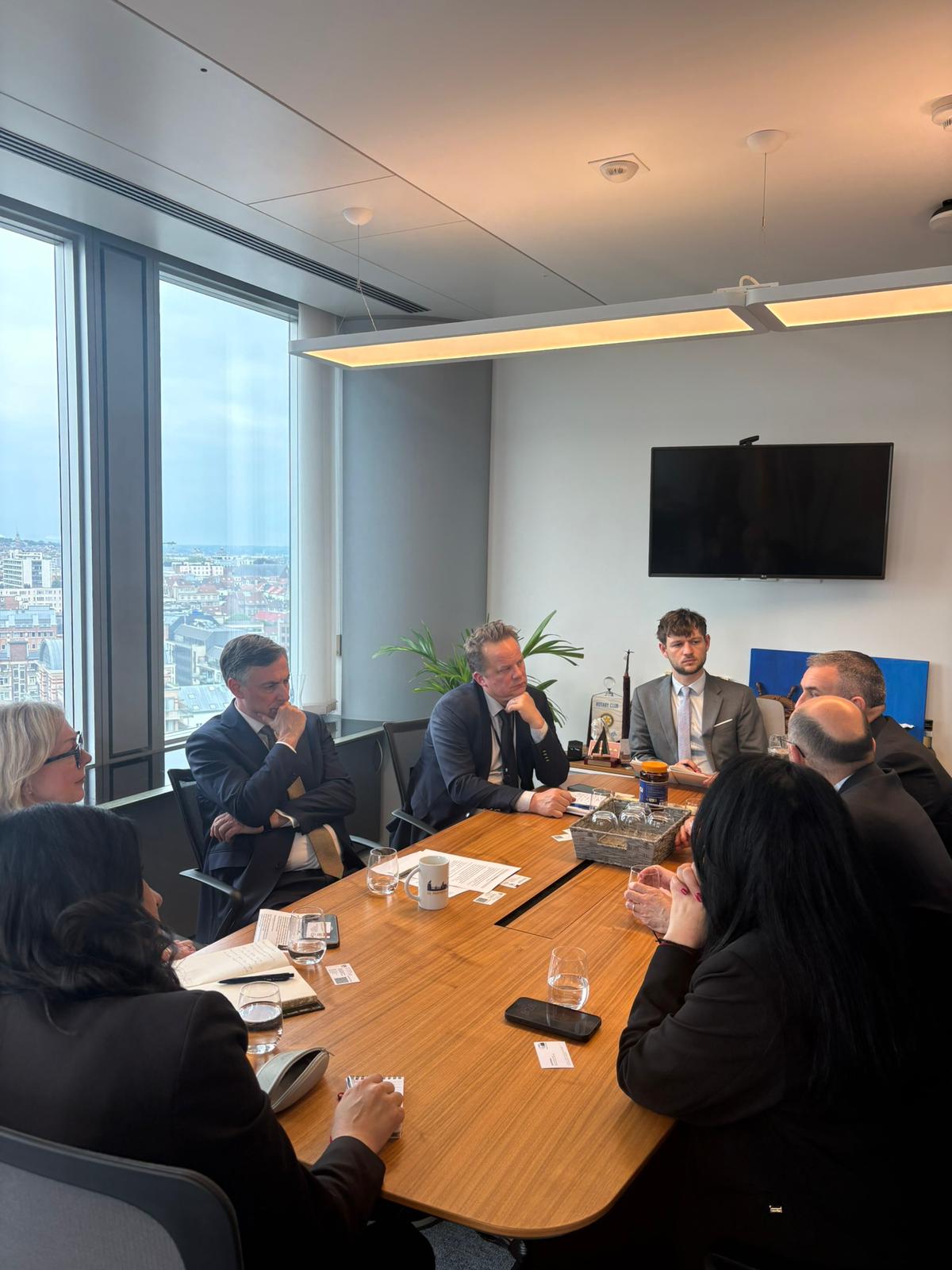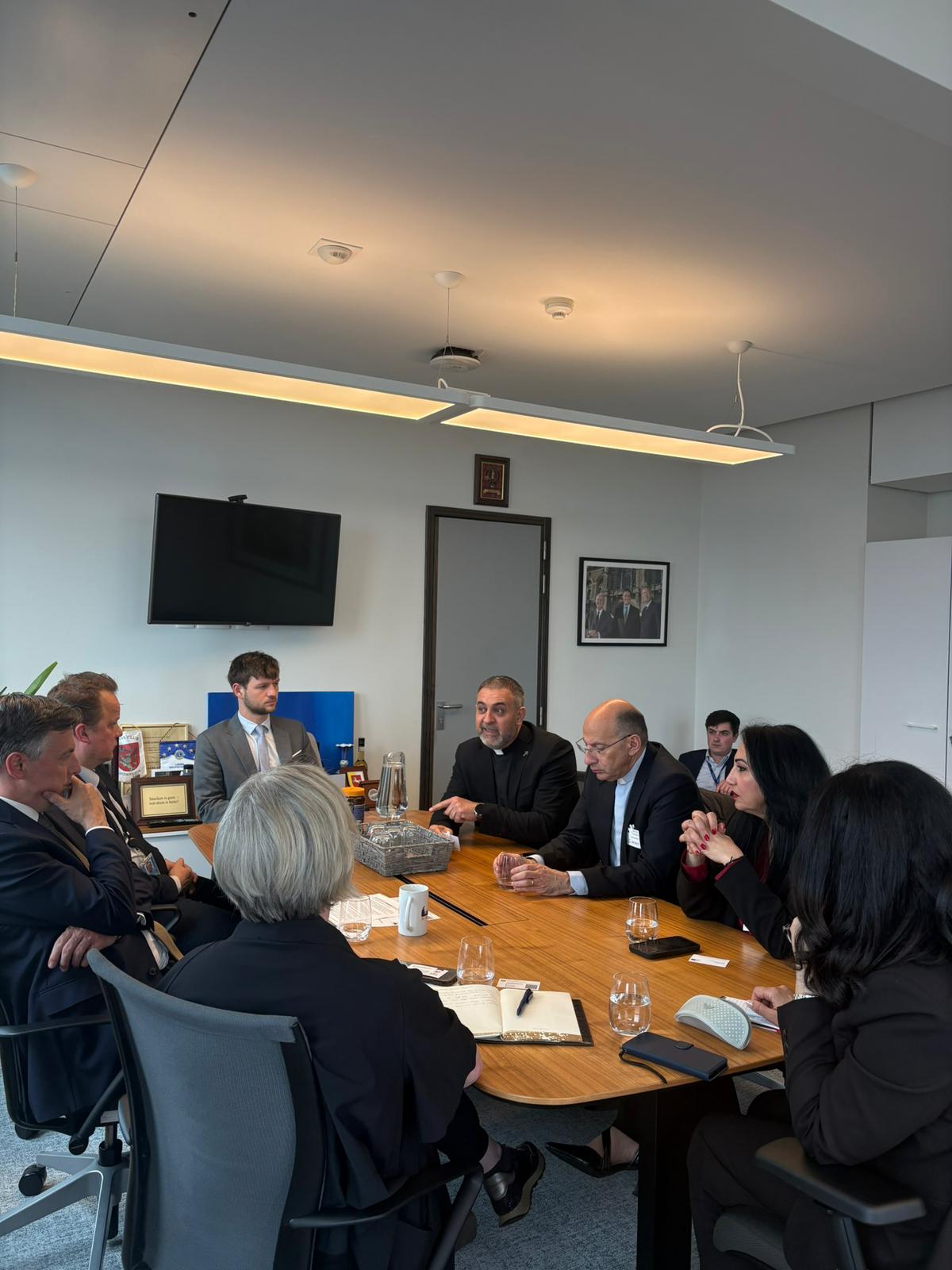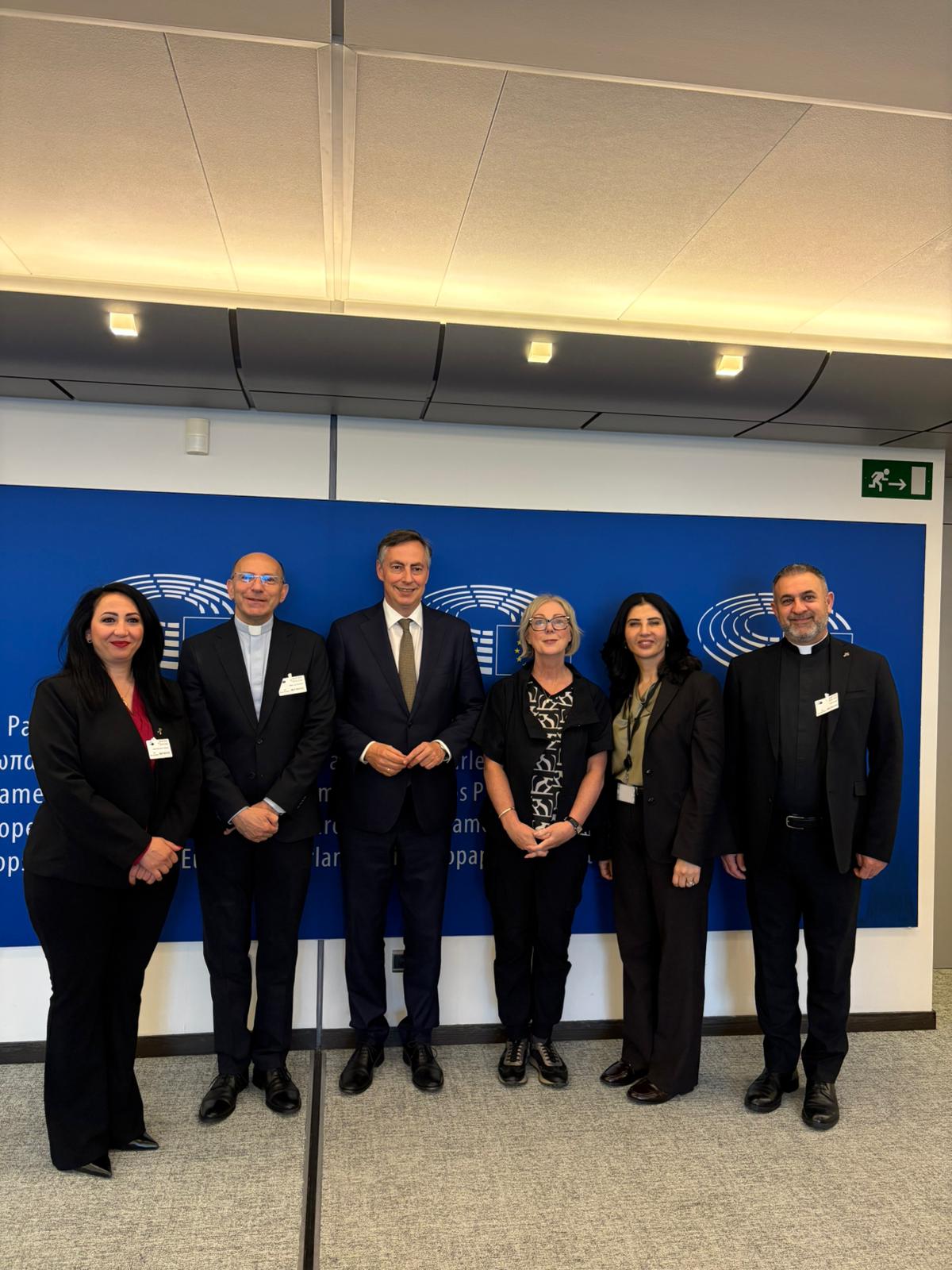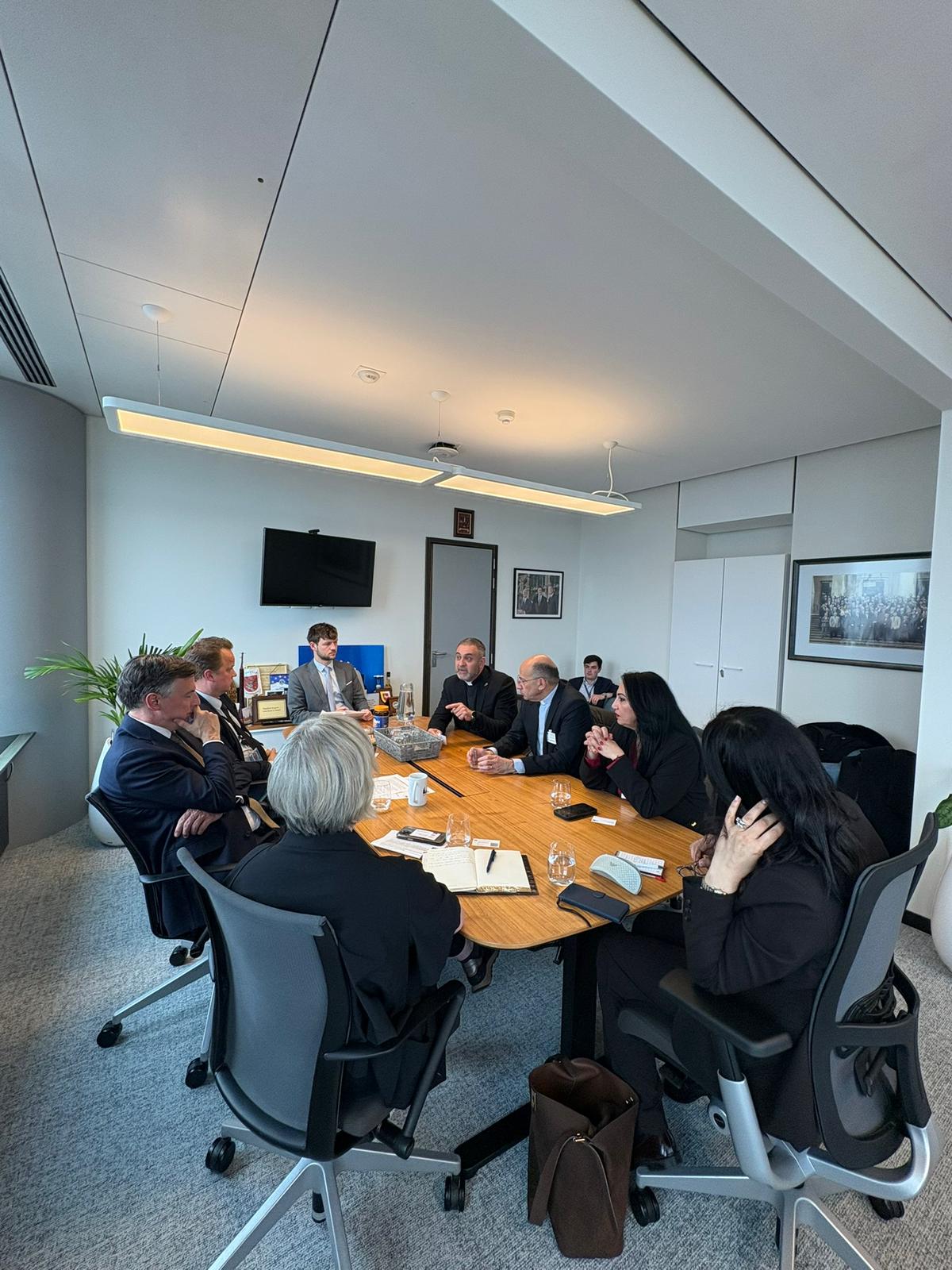
The Higher Presidential Committee for Church Affairs in Palestine held a high-level meeting at the European Parliament to address the escalating and systematic targeting of the Christian presence in the occupied Palestinian territory, particularly in Jerusalem.
The meeting was attended by Committee Member and Representative in Europe Amira Hanania, Founder and President of Dar Al-Kalima University Rev. Dr. Mitri Raheb, and Pastor of St. Andrew’s Episcopal Church in Ramallah Rev. Dr. Fadi Diab, in the presence of the Ambassador of the State of Palestine to Belgium, Luxembourg, and the European Union, Dr. Amal Jadou Shakaa. The delegation met with Chair of the European Parliament’s Committee on Foreign Affairs David McAllister and Member of the European Parliament from the European People’s Party Regina Doherty.
During the meeting, the delegation presented an extensive briefing on the unprecedented escalation of violations targeting Palestinian Christians, churches, clergy, and holy sites, under Israeli occupation policies. The delegation stressed that these practices constitute direct violations of international humanitarian law and fundamental principles guaranteeing freedom of religion and worship.
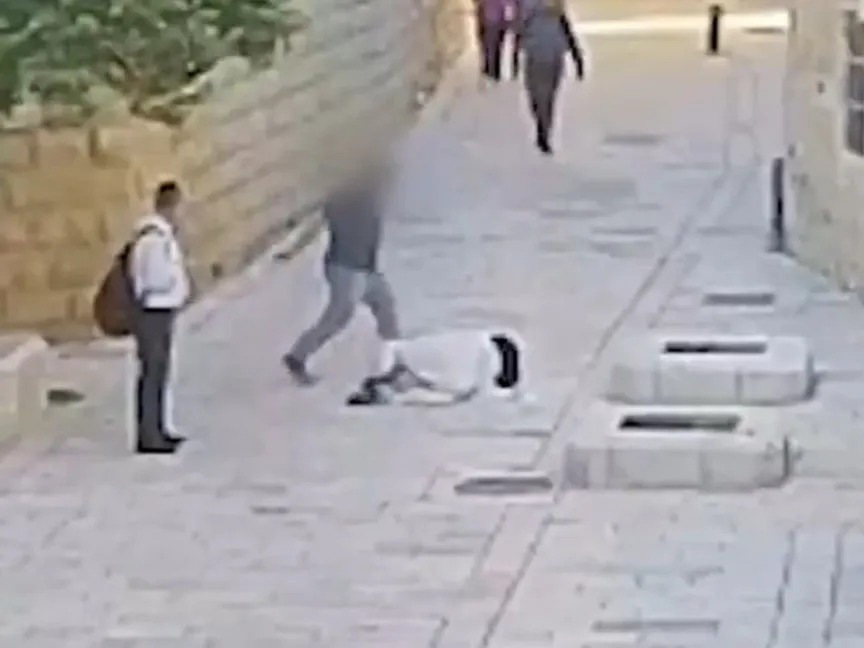
The delegation highlighted the alarming rise in settler attacks against Christian communities and religious institutions, including assaults on clergy, desecration of religious symbols and sacred spaces, and the growing spread of incitement and hate speech against Christians in the Holy Land, all taking place within a climate of near-total impunity.
Particular attention was drawn to the deteriorating situation in several Palestinian areas, especially the town of Taybeh, as well as Birzeit, Beit Sahour, Al-Makhrour, and other communities facing escalating settler violence and intimidation. The delegation warned that the absence of effective international protection and the continued failure to hold perpetrators accountable pose a direct and unprecedented threat to the continuity of the historic and indigenous Christian presence in Palestine.
The Committee further emphasized that these violations are not isolated incidents, but rather part of a broader and systematic policy aimed at undermining the Palestinian Christian presence through increasing restrictions on religious worship, attempts to seize church lands and properties, the imposition of unjust taxes on church institutions, and mounting political, economic, and social pressures that contribute to the forced displacement and migration of Palestinian Christians from their homeland.
The delegation stressed that the continuation of such policies in the absence of meaningful international accountability represents a dangerous erosion of the international legal order and emboldens further violations. In this context, the Committee called upon the European Union to move beyond statements of concern and adopt concrete political and legal measures that ensure accountability, provide protection for Palestinian civilians and holy sites, and put an end to the culture of impunity.
The meeting also underscored the importance of maintaining this issue as a permanent priority on the agenda of the European Parliament and establishing effective parliamentary follow-up mechanisms capable of monitoring developments on the ground and translating them into tangible political action.
At the conclusion of the meeting, both sides agreed to continue coordination and joint engagement in support of efforts aimed at protecting holy sites, preserving religious pluralism, and safeguarding the authentic Christian presence in the birthplace of Christianity against accelerating policies seeking to erase and marginalize it.
This meeting comes as part of the Higher Presidential Committee’s ongoing international political and diplomatic efforts to convey the reality facing Palestinian Christians to global decision-makers and to advance stronger and more principled international positions that uphold legal and moral responsibilities and translate into concrete action on the ground.